Reviewed by Pharmacist Chong Kai Qian
Gut Health and Sleep Quality
A sleep crisis is a growing health concern among urban, modern populations. Studies on sleep quality in Malaysia indicate a high prevalence of poor sleep among various groups, not only working adults but as well as university students [1,2].
While people often turn to various supplements or medications for relaxation and insomnia, emerging research suggests that gut health might be the missing link to better sleep. [2].
The Gut–Brain Axis and Sleep
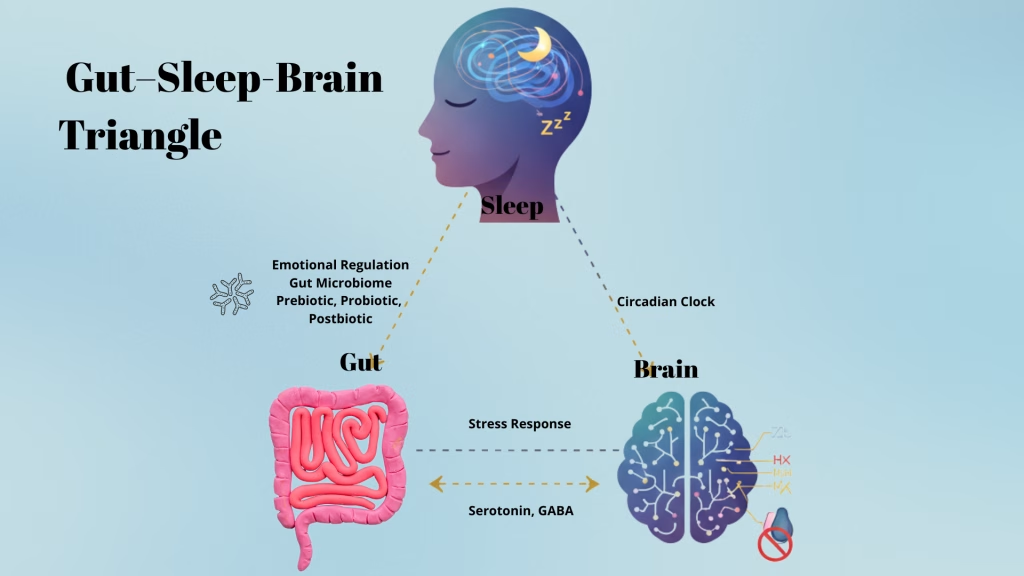
We all know that probiotics are for gut health. But did you know there is a strong connection between your digestive system and central nervous system known as the gut–brain axis [2]? This network allows gut microbes to influence the brain and vice versa, affecting everything from stress response to emotional regulation [3].
When we introduce probiotics, the beneficial live microorganisms, we are essentially attempting to modulate this gut-brain axis [4]. This idea has led to the emerging concept of psychobiotics: specific strains of probiotics that, when ingested, may support emotional well-being and overall sleep quality [4].
How Probiotics (Psychobiotics) Might Improve Sleep
Probiotics don’t knock you out like sleeping pills do. Instead, they work by addressing underlying factors that contribute to insomnia, primarily stress and mood, through their effects on the gut. Here are some few proposed mechanisms to connect probiotic and sleep.
1. Increasing Secretion of Neurotransmitters
Up to 90% of the body’s serotonin, the precursor to the sleep hormone melatonin—is synthesized in the gut [5].
Certain probiotic strains, especially those belonging to the Lactobacillus and Bifidobacterium families, can promote the synthesis of GABA [6,7]. Increased GABA may support relaxation and calmness, which contributes to better rest [7].
2. Modulating Microbiome & Lowering Systemic Stress Signals
High cortisol, the body’s stress hormone, often disrupts sleep. Studies suggest that probiotics can help balance the microbiome and maintain gut barrier integrity, which helps regulate stress signals and lower nighttime awakenings. [2].
What the Research Says Probiotic and Sleep
A 2024 meta-analysis in Clinical Nutrition ESPEN found that probiotic supplementation significantly reduced PSQI (Pittsburgh Sleep Quality Index) scores, meaning participants felt their sleep improved within 4–8 weeks [8]. Here are some of the probiotic strains clinically studied for sleep quality:
- Bifidobacterium breve CCFM1025: A 2023 study found that supplementation with Bifidobacterium breve CCFM1025 was studied for its potential to support sleep quality in adults experiencing sleep difficulties (lowered PSQI scores), likely by regulating serum cortisol and reducing the inflammatory response [9]
- Lactobacillus plantarum DR7: Research published in 2020 on Lactobacillus plantarum DR7 demonstrated its effectiveness in improving stress-related symptoms, which translated to better self-reported sleep quality [10].
- Multi-strain Lactobacillus Consortium: A 2020 clinical trial combining several Lactobacillus species (including L. acidophilus, L. plantarum, L. rhamnosus) demonstrated faster sleep onset and fewer disturbances [11].
Choosing & Using Probiotics for Sleep
Look for products that specifically contain documented “psychobiotic” strains, such as:
- Lactobacillus plantarum (e.g., DR7, FB0015)
- Bifidobacterium breve (e.g., CCFM1025)
- Targeted Multi-Strain Probiotics containing high doses of Lactobacillus or Bifidobacterium.
In conclusion, probiotics offer a non-drug, natural approach to improving sleep quality by supporting restful sleep, especially for those feeling stressed or imbalanced [8].
While they may not dramatically increase total sleep duration or cause drowsiness, clinical evidence suggests they can help you feel more rested by supporting the gut–brain axis and stabilizing body’s stress response.
Disclaimer: This information is for educational purposes only and should not replace advice from your doctor or healthcare professional. Please consult a qualified provider before making changes to your diet or health regimen.
About the Reviewer
Chong Kai Qian is a pharmacist registered with the Malaysia Pharmacy Board (Lembaga Farmasi Malaysia, LFM), who has over seven years of professional experience across hospital, community, and pharmaceutical sectors. Guided by a strong purpose to bridge clinical insight with real-world impact, she is dedicated to transform complex medical data into meaningful outcomes that could improve patient care, strengthen therapeutic value, and advance evidence-based healthcare practice.
References
- Lakshme, S. V., Sharranesh, R., Yong Khang, Y., & Arvinder-Singh, H. S. (2025). Sleep quality, sleep hygiene practices and their influencing factors among Malaysian university students: A cross-sectional study. Malaysian family physician : the official journal of the Academy of Family Physicians of Malaysia, 20, 22. https://doi.org/10.51866/oa.717
- Chan, C. M. H., Siau, C. S., Wong, J. E., Wee, L. H., Jamil, N. A., & Hoe, V. C. W. (2021). Prevalence of Insufficient Sleep and Its Associated Factors Among Working Adults in Malaysia. Nature and science of sleep, 13, 1109–1116. https://doi.org/10.2147/NSS.S295537
- Appleton, J. (2018). The gut-brain axis: Influence of microbiota on mood and mental health. Integrative Medicine (Encinitas, Calif.), 17(4), 28–32. Retrieved from: https://pmc.ncbi.nlm.nih.gov/articles/PMC6469458/
- Johns Hopkins Medicine. (n.d.). The brain-gut connection. https://www.hopkinsmedicine.org/health/wellness-and-prevention/the-brain-gut-connection
- Ansari, F., Neshat, M., Pourjafar, H., Jafari, S. M., Samakkhah, S. A., & Mirzakhani, E. (2023). The role of probiotics and prebiotics in modulating the gut-brain axis. Frontiers in Nutrition, 10, 1173660. https://doi.org/10.3389/fnut.2023.1173660
- Bektaş, A., Erdal, H., Ulusoy, M., & Uzbay, I. T. (2020). Does serotonin in the intestines make you happy? The Turkish Journal of Gastroenterology, 31(10), 721–723. doi: 10.5152/tjg.2020.19554
- Iorizzo, M., Paventi, G., & Di Martino, C. (2023). Biosynthesis of gamma-aminobutyric acid (GABA) by Lactiplantibacillus plantarum in fermented food production. Current Issues in Molecular Biology, 46(1), 200–220. https://doi.org/10.3390/cimb46010015
- Altaib, H., Badr, Y., & Suzuki, T. (2021). Bifidobacteria and psychobiotic therapy: Current evidence and future prospects. Reviews in Agricultural Science, 9, 74–91. https://doi.org/10.7831/ras.9.0_74
- Ito, H., et al. (2024). Effects of probiotics on sleep parameters: A systematic review and meta-analysis. Clinical Nutrition ESPEN, 63, 623–630. http://doi:10.1016/j.clnesp.2024.07.006
- Lan, Y., Lu, J., Qiao, G., Mao, X., Zhao, J., Wang, G., Tian, P., & Chen, W. (2023). Bifidobacterium breve CCFM1025 improves sleep quality via regulating the activity of the HPA axis: A randomized clinical trial. Nutrients, 15(21), 4700. https://doi.org/10.3390/nu15214700
- Liu, G., Chong, H. X., Chung, F. Y., Li, Y., & Liong, M. T. (2020). Lactobacillus plantarum DR7 modulated bowel movement and gut microbiota associated with dopamine and serotonin pathways in stressed adults. International Journal of Molecular Sciences, 21(13), 4608. https://doi.org/10.3390/ijms21134608
- Bongiovanni, T., Santiago, M., Zielinska, K., et al. (2025). A Lactobacillus consortium provides insights into the sleep–exercise–microbiome nexus in proof-of-concept studies of elite athletes and in the general population. Microbiome, 13(1), 1. https://doi.org/10.1186/s40168-024-01936-4