
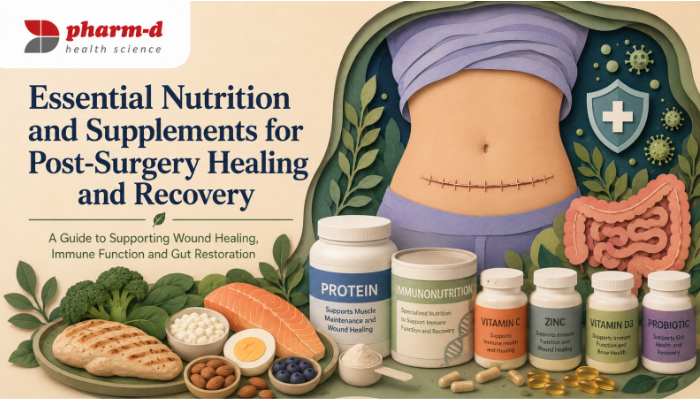
A Guide to Supporting Wound Healing, Immune Function and Gut Restoration
While surgery or surgical procedure may resolve a medical condition, recovery is a demanding process that continues after discharge.
Tissue repair for wound healing, immune activation to fight infections, gut microbiome restoration after a treatment course, and muscle rebuilding to prevent muscle weakness, all require targeted, specialised nutritional support [1]. Without the right nutrition, patients face higher risks of delayed wound healing, infections, muscle loss, prolonged fatigue, extended hospital stays and many other complications [2].
Increasingly, clinical guidelines now recognise nutrition as a core component of recovery [3]. This applies even to cancer care [27, 28].
This guide explores the essential nutrition and supplementation strategies that optimises post-surgery healing and recovery.
Why Nutrition Matters After Surgery
After surgery, the body enters a hypermetabolic and inflammatory state, where stress hormones would increase, protein breakdown accelerates, and energy demands rise more than usual [4, 5].
Common post-surgical challenges include [5]:
- Reduced appetite
- Nausea or bloating
- Antibiotic-related gut disruption
- Difficulty chewing or swallowing
- Increased protein and micronutrient requirements
Without proactive nutritional intervention, even well-nourished individuals can develop acute protein and energy deficits within days.
1. Protein is Essential in Wound Healing
How Much Protein Do You Need After Surgery?
After surgery, a normal adult individual’s protein needs typically increase to 1.2–2.0 grams per kilogram of body weight per day, depending on [6]:
- Type of surgery
- Level of metabolic stress
- Presence of infection or complications
- Age and baseline muscle mass
For a 60 kg adult, that translates to 72–120 grams of protein daily, which is often difficult to achieve through normal meals alone.
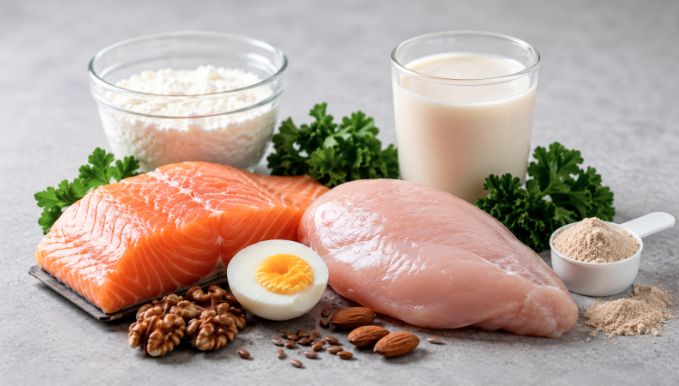
Protein is critical for wound healing as it provides the essential building blocks for collagen production and the formation of new tissue [5, 7].
Why Protein is Critical
Protein supports [5,7]:
- Collagen production for wound closure
- Formation of new tissue
- Immune cell function
- Preservation of lean muscle mass
- Prevention of sarcopenia (muscle loss) during hospitalisation
Insufficient protein intake is associated with delayed healing, increased infection risk, and reduced functional recovery [8].
Surgery creates an immediate, high-demand “metabolic tax” on the body. Especially for cancer patients, this stress is compounded by prior treatments that may have already weakened tissue integrity. Sufficient protein is the difference between a body that “cannibalizes” its own muscle to heal a surgical site and one that has the external resources to rebuild efficiently.
Learn more here: Why Protein is Essential for Cancer Patients
When Modular Protein Is Beneficial
Modular, high-quality protein supplementation allows [9]:
- Precise dosing without excess volume
- Easy mixing into soups, beverages, or enteral feeds
- Better tolerance in patients with low appetite
- Flexible adjustments based on recovery stage
High protein intake is therefore compulsory for a more optimised healing and recovery process.
2. Immunonutrition Supports and Strengthens the Immune System
Surgery, especially major ones, commonly triggers systemic inflammation and immune activation in the body. While inflammation is part of healing, excessive or prolonged inflammatory responses may impair recovery [10].
Immunonutrition refers to targeted nutrients, also commonly known as immunonutrients, that modulate immune and inflammatory pathways [11].
Key immunonutrients often include [11]:
- Arginine: An amino acid that supports T-cell function and enhances immune responses.
- Glutamine: Vital for lymphocyte proliferation and maintaining intestinal mucosal integrity.
- Omega-3 Polyunsaturated Fatty Acids (PUFAs): Possess anti-inflammatory properties and can modulate immune cell function.
- Nucleotides: Essential for DNA and RNA synthesis, supporting rapid cell division and immune responses.
Learn more about Immunonutrition here: What is Immunonutrition
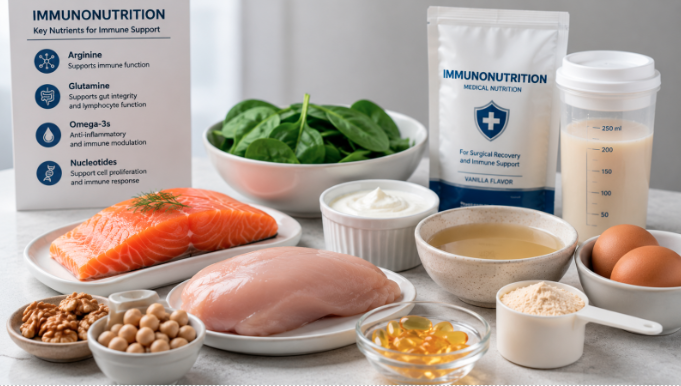
Clinical evidence suggests that appropriate immunonutrition may [12]:
- Reduce post-operative infection rates
- Shorten hospital stays
- Improve wound healing
- Get back to normal diet and activities earlier
In moderate-to-high-risk surgeries — including abdominal and oncological procedures — immunonutrition may be incorporated into Enhanced Recovery After Surgery (ERAS) protocols [12, 13].
3. Gut Microbiome Restoration After Surgery for Immune Function
Antibiotics, anesthesia, fasting, and surgical stress can significantly disrupt the gut microbiome and lead to microbial imbalance (dysbiosis) [14].
This disruption and imbalance may cause symptoms such as [14]:
- Bloating and irregular bowel movements
- Increased gut permeability
- Reduced immune resilience
- Delayed appetite recovery
The gut is the central organ for the immune system, with approximately 70-80% immune cells residing in the gut [14, 15].
Therefore, it is very important to restore and protect gut health and microbial balance for optimal immune function, which require the following gut microbiome essentials:
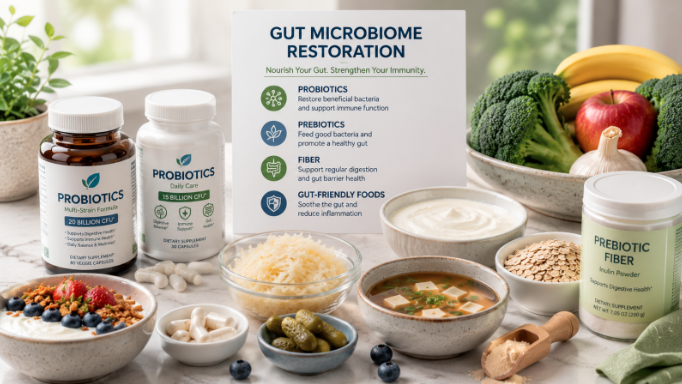
Antibiotics, anesthesia and surgical stress can disrupt the gut microbiome and weaken overall immune system. Probiotics, prebiotics and short-chain fatty acids work together to help restore microbial balance, strengthen gut integrity, and support post-surgical healing and recovery.
Probiotics
Probiotics are beneficial live microorganisms in the gut that help to restore microbial diversity and suppress inflammation to modulate the immune system [16].
Clinical studies suggest that selected probiotic strains may help in post-surgery recovery such as [17]:
- Lower risk of certain post-operative infections
- Support immune modulation
- Decrease surgical stress response
A meta-analysis demonstrated that the use of perioperative probiotic or synbiotic significantly reduced post-operative infections in gastrointestinal surgery patients [18].
While probiotics offer significant recovery benefits, they must be used with caution for certain patient groups such as cancer and the immunocompromised, as the introduction of live microorganisms carries a theoretical risk of systemic infection [19]. The risk is especially higher for those with immunodeficiency, hospitalised in the intensive care unit and patients with central venous catheters [20].
Always consult your healthcare provider before starting any new supplements or dietary regimen, especially if you have certain underlying health conditions.
Prebiotics
Prebiotics are non-digestible dietary fibers that stimulate the growth and activity of beneficial gut bacteria [21].
By nourishing the gut bacteria, prebiotics may [21]:
- Promote microbial diversity
- Enhance mucosal barrier function
- Improve bowel regularity
- Support endogenous production of short-chain fatty acids
Prebiotic fermentation plays a foundational role in maintaining gut ecosystem stability [22].
Short-Chain Fatty Acids (SCFAs)
Short-chain fatty acids (SCFAs) are produced when gut bacteria ferment dietary fiber [23].
Among them, Butyrate is particularly significant in post-surgical recovery due to its role in [24, 25, 26]:
- Providing primary energy for colonocytes
- Strengthening intestinal barrier integrity
- Regulating inflammatory signaling pathways
- Supporting immune homeostasis
Butyrate has been shown to influence regulatory T-cell differentiation and intestinal immune responses, highlighting its systemic relevance [25].
Together, probiotics, prebiotics, and SCFAs function as an integrated triad supporting gut microbiome balance for better immune regulation and systemic healing.
Hence, gut microbiome restoration after surgery is not merely about digestive comfort, but an essential step that may influence inflammatory balance and recovery trajectory.
4. When Food Alone Does Not Provide Adequate Nutrition
During early recovery, patients may struggle to meet increased nutritional demands due to [12, 26, 27]:
- Early satiety
- Loss of appetite
- Post-operative ileus
- Dysphagia
- Tastebud changes
- Fatigue
In these scenarios, specialised nutrition and supplements may be considered, including:
- Protein supplements
- Immunonutrition formulations
- Gut supplements
- Food and drinks thickener to modify texture for safer swallowing
Specialised nutrition, also often known as medical nutrition, is developed for therapeutic use and commonly prescribed by healthcare professionals in clinical settings to address specific medical conditions and metabolic demands. These formulations are designed with precise nutrient composition to meet specific physiological requirements during periods of illness, surgical stress, or recovery.
This ensures that individuals can continue to recuperate even when appetite, eating patterns, digestive tolerance, or swallowing abilities are altered. With the use of specialised nutrition and supplementation, the healing and recovery process can continue with the right nutritional support tailored to the body’s demands with less disruptions.
Frequently Asked Questions
How long should I focus on high-protein intake after surgery?
Typically for at least 2–6 weeks, depending on surgical type and healing progress. Complex surgeries may require longer support.
Can probiotics be taken immediately after surgery?
In many cases, yes, particularly after antibiotic use; but patients should consult their healthcare provider for personalised advice.
Is immunonutrition necessary for minor procedures?
Not always. It is more commonly considered in major surgeries or high-risk, immuno-compromised patients.
---
The Bottom Line
Post-surgical recovery is an active, demanding process involving immune regulation, connective tissue repair, muscle preservation, and restoration of gut integrity. Each of these processes depends on adequate and targeted nutritional support.
Nutrition should therefore not be viewed as secondary for surgical care, but as a core component of recovery. Proactive, clinically guided nutritional planning can meaningfully influence healing trajectory, functional outcomes, and overall resilience. While surgery addresses the underlying condition, appropriate nutritional support enables the body to repair, restore, and regain strength.
Always consult your healthcare provider: Before starting any new supplements or dietary regimen, please seek professional medical advice. This is particularly important if you have an underlying health condition, preparing for a surgical procedure or undergoing certain medical treatments, to ensure that these interventions do not interfere with your specific medications or treatment timeline.
---
References
- Stanescu, C., et al (2025). The Roles of Micronutrition and Nutraceuticals in Enhancing Wound Healing and Tissue Regeneration: A Systematic Review. Molecules, 30(17), 3568. https://doi.org/10.3390/molecules30173568
- Seth, I., et al (2024). Impact of nutrition on skin wound healing and aesthetic outcomes: A comprehensive narrative review. JPRAS open, 39, 291–302. https://doi.org/10.1016/j.jpra.2024.01.006
- Cochran, A., et al (2023). Impact of nutritional compliance within ERAS protocols for hepatopancreatobiliary, radical cystectomy, and head and neck procedures: A case-matched analysis adjusted for major complications. Clinical Nutrition ESPEN, 55, 109–115. https://doi.org/10.1016/j.clnesp.2023.03.001
- Acharya, K., et al (2025). Surgical Stress Response: A Physiological Review of the Endocrine, Immune, and Metabolic Changes. Cureus, 17(12), e100101. https://doi.org/10.7759/cureus.100101
- Weimann, A., Braga, M., Carli, F., et al. (2021). ESPEN practical guideline: Clinical nutrition in surgery. Clinical Nutrition, 40(7), 4745-4761. https://doi.org/10.1016/j.clnu.2021.03.031
- Thibault, R., Abbasoglu, O., Ioannou, E., et al. (2021). ESPEN guideline on hospital nutrition. Clinical Nutrition, 40(12), 5684-5709. https://www.espen.org/files/ESPEN-Guidelines/ESPEN_guideline_on_hospital_nutrition.pdf
- Healthline. (2023). 9 important functions of protein in your body. https://www.healthline.com/nutrition/functions-of-protein
- Demling, R. H. (2009). Nutrition, anabolism, and the wound healing process. Nutrients, 1(1), 70–114. https://europepmc.org/article/PMC/2642618
- Yi, H. C., et. al (2020). Impact of Enhanced Recovery after Surgery with Preoperative Whey Protein-Infused Carbohydrate Loading and Postoperative Early Oral Feeding among Surgical Gynecologic Cancer Patients: An Open-Labelled Randomized Controlled Trial. Nutrients, 12(1), 264. https://doi.org/10.3390/nu12010264
- Raziyeva, K., et al (2021). Immunology of Acute and Chronic Wound Healing. Biomolecules, 11(5), 700. https://doi.org/10.3390/biom11050700
- Liu, Y., Li, F., Hu, J. et al. The application of immunonutrition in patients with cancer: current status and future perspectives. Holist Integ Oncol 3, 45 (2024). https://doi.org/10.1007/s44178-024-00112-w
- Ho, C.Y., et al (2026). Perioperative immunonutrition intervention on postoperative outcomes among gynaecological cancer patients under enhanced recovery after surgery setting. Support Care Cancer 34. https://doi.org/10.1007/s00520-026-10557-6
- Matsui, R., et al (2024). Impact of Perioperative Immunonutrition on Postoperative Outcomes in Patients with Upper Gastrointestinal Cancer: A Systematic Review and Meta-Analysis of Randomized Controlled Trials. Nutrients, 16(5), 577. https://doi.org/10.3390/nu16050577
- Zheng Z, et al (2023) The implication of gut microbiota in recovery from gastrointestinal surgery. Front. Cell. Infect. Microbiol. 13:1110787. https://doi.org/10.3389/fcimb.2023.1110787
- Wiertsema, S. P., et al (2021). The Interplay between the Gut Microbiome and the Immune System in the Context of Infectious Diseases throughout Life and the Role of Nutrition in Optimizing Treatment Strategies. Nutrients, 13(3), 886. https://doi.org/10.3390/nu13030886
- Thoda, C., & Touraki, M. (2023). Immunomodulatory Properties of Probiotics and Their Derived Bioactive Compounds. Applied Sciences, 13(8), 4726. https://doi.org/10.3390/app13084726
- Shamim M (2026) Meta-analysis of efficacy of probiotics in reducing postoperative infections and improving outcomes in gastrointestinal surgery. Front. Surg. 13:1746191. doi: 10.3389/fsurg.2026.1746191
- Yang, Y., et al. (2017). Effect of Perioperative Probiotics and Synbiotics on Postoperative Infections After Gastrointestinal Surgery: A Systematic Review With Meta-Analysis. JPEN. Journal of parenteral and enteral nutrition, 41(6), 1051–1062. https://doi.org/10.1177/0148607116629670
- Redman, M. G., Ward, E. J., & Phillips, R. S. (2014). The efficacy and safety of probiotics in people with cancer: a systematic review. Annals of oncology : official journal of the European Society for Medical Oncology, 25(10), 1919–1929. https://doi.org/10.1093/annonc/mdu106
- Wiszpolska, M., & Zaleska, A. (2024). Probiotics – when and for whom in the oncological patient population. Nowotwory. Journal of Oncology, 74(1), 45–52. https://doi.org/10.5603/njo.97333
- Gibson, G. R., et al. (2017). Expert consensus document: The International Scientific Association for Probiotics and Prebiotics (ISAPP) consensus statement on the definition and scope of prebiotics. Nature Reviews Gastroenterology & Hepatology, 14(8), 491–502. https://doi.org/10.1038/nrgastro.2017.75
- Gill, S. K., et al (2021). Dietary fibre in gastrointestinal health and disease. Nature reviews. Gastroenterology & hepatology, 18(2), 101–116. https://doi.org/10.1038/s41575-020-00375-4
- Healthline (updated 2025). The Proven and Potential Benefits of Butyric Acid. https://www.healthline.com/health/butyric-acid
- van der Beek, C M et al (2017). Role of short-chain fatty acids in colonic inflammation, carcinogenesis, and mucosal protection and healing, Nutrition Reviews 75 (4), 286–305. https://doi.org/10.1093/nutrit/nuw067
- Hajjar, R., et al (2021). The role of butyrate in surgical and oncological outcomes in colorectal cancer. American journal of physiology. Gastrointestinal and liver physiology, 320(4), G601–G608. https://doi.org/10.1152/ajpgi.00316.2020
- Koh, A., et al. (2016). From dietary fiber to host physiology: Short-chain fatty acids as key bacterial metabolites. Cell, 165(6), 1332–1345. https://doi.org/10.1016/j.cell.2016.05.041
- Ho, C. Y., et al (2020). Nutrition support following enhanced recovery after surgery protocol for malnourished cancer elderly patient. Asian Journal of Dietetics, 2(2), 75–78.
- Nguyen, T. H., et al (2023). A longitudinal assessment of appetite loss and nutritional care among postoperative patients in Vietnam. Frontiers in nutrition, 10, 1008636. https://doi.org/10.3389/fnut.2023.1008636