Reviewed by Pharmacist Chong Kai Qian
The Gut-Brain Axis
We’ve all been there: tossing and turning at 4 a.m. or feeling anxious for no clear reason. You might blame stress, caffeine, or work, but the real trigger could be deeper in your gut.
In recent years, studies have shown there is a two-way highway between the digestive system and the brain, called the gut-brain axis. Digestive system might directly impact how you handle stress, how happy you feel, and how deeply you sleep. Science now explains why: the gut is our second brain [1].
For centuries, we thought of the gut as a simple pipe that processes food. The brain, on the other hand, was regarded as the command center for thoughts and emotions and operates independently from the gut.
However, with the theory of gut-brain axis, we now know that the gut is in constant conversation with the brain, making the two inseparable and interconnected.
How the Gut-Brain Axis affect our Brain and Mental Health
Here are some key functions of the gut-brain axis that explain why the gut plays a crucial role in brain and mental health.
1. Neural Signaling via the Vagus Nerve
The vagus nerve acts as a highway closely connected between the gut and the brain. Primarily, vagus nerves convey sensory information to regulate processes like digestion, emotion, inflammation, and immune responses [1].
When beneficial bacteria flourish in the gut (which is also known as our gut microbiome), they send calming messages through vagus nerve to the brain, helping regulate stress responses and mood. Dysbiosis, an imbalance in gut microbes, disrupts this signaling, which can lead to anxiety and disturbed sleep [2].
2. Hormonal & Immune Pathways
Gut microbes help regulate key hormones and neurotransmitters such as cortisol, serotonin, and other important neuroactive compounds, which influence stress response, mood and cognition, and are closely linked with the immune system.
An imbalanced gut flora triggers inflammation and cytokine release, which can cross the blood-brain barrier and affect mood and cognition [3].
3. Microbial Metabolites & Neurotransmitters
Certain gut bacteria produce microbial metabolites like short-chain fatty acids (SCFAs) like butyrate, which can affect the brain and influence neuroplasticity.
Some other gut bacteria help synthesize Gamma-Aminobutyric Acid (GABA) and serotonin precursors, the same molecules that help regulate calmness and relaxation [4].
How the Digestive System Affects Stress, Mood, and Sleep
When the gut microbiome is balanced, it produces sufficient neurotransmitters like serotonin, dopamine, and GABA, which help to regulate mood, relaxation, and sleep cycles [4]. However, an imbalance—known as dysbiosis—can trigger inflammation, increase cortisol levels, and disrupt these signaling pathways, leading to anxiety, poor sleep, or low mood [5].
1. Gut Health and Stress Regulation
Certain probiotic strains, such as Lactobacillus plantarum DR7, have been shown to lower stress-related hormones and improve cognitive and emotional response during stressful periods [6].
Emergently known as Psychobiotics, these bacteria appear to modulate the hypothalamic-pituitary-adrenal (HPA) axis, which controls the body’s stress response.
2. Gut Microbiome and Mood
Clinical studies suggest that “psychobiotics”, defined as probiotics that could impact brain function and influence the mood, are clinically studied in their relationship with regulated neurotransmitters linked to mood.
For instance, Bifidobacterium longum NCC3001 improved mood and reduced brain activity associated with anxiety in human trials [7].
3. Gut Bacteria and Sleep Quality
Research also shows that gut bacteria influence sleep through their effect on serotonin and melatonin production.
Specific probiotic strains such as Bifidobacterium breve CCFM1025 and Lactobacillus plantarum PS128 have been found to enhance sleep quality in adults experiencing mild insomnia, such as during deep sleep stage [8,9].
All these findings have shown benefits of probiotics beyond gut health. It is also about supporting emotional balance, better stress resilience, and restful sleep.
How Gut Health Impacts Stress & Mood
Stress doesn’t only happen in your mind. Chronic stress not only changes gut motility, but also increases intestinal permeability, and weakens microbial diversity [10], all of which ultimately lead to anxiety and insomnia.
Example of The Gut-Brain Connection: Irritable Bowel Syndrome (IBS)
People with Irritable Bowel Syndrome (IBS) often experience anxiety and poor sleep. Chronic stress in IBS not only alters gut motility, but also increases intestinal permeability, and reduces microbial diversity, can further disrupt the gut–brain axis, contributing to worsening mental health. [11]
What You Can Do to Support the Gut–Brain Axis Naturally
You have tremendous power to change this cycle. Starting with food and lifestyle changes to improve your gut microbiome health is the first step towards breaking the cycle and strengthening the gut-brain axis.
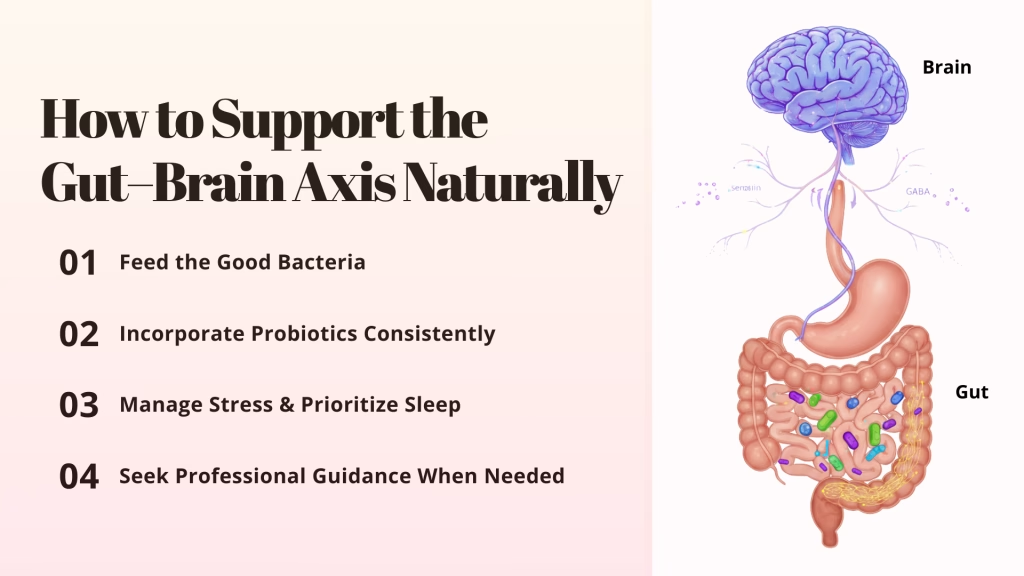
1. Feed the Good Gut Bacteria with Rich Fiber Sources
Eat a diverse plant-based diet rich in fiber, (also known as prebiotics), such as onions, garlic, oats, and polyphenols like berries and tea. The Malaysia Dietary Guideline (MDG) 2020 suggests aiming for at least three servings of vegetables and two servings of fruit daily.
2. Incorporate Probiotics Consistently
Choose clinically studied probiotic strains, also referred to as psychobiotics (e.g.: Bifidobacterium breve CCFM1025, Lactobacillus plantarum PS128, or Lactobacillus plantarum DR7), and take them consistently for 4–8 weeks. Always read product labels for specific strain codes — benefits are strain-specific, not generic.
- Learn more about psychobiotic research and clinically studied strains in [What Is Psychobiotics: How Gut Bacteria May Influence Your Brain].
3. Manage Stress & Prioritize Sleep
Vagus nerve stimulation through deep breathing, yoga, or mindfulness helps for mental health. Maintain a consistent bedtime and wake-up time (even on weekends), get morning sunlight, and make sure your bedroom is dark and cool.
4. Seek Professional Guidance When Needed
Start with diet and lifestyle. However, if anxiety, insomnia, or gut symptoms are severe, persistent, or interfere with your daily life, it’s time to consult a doctor, therapist, or specialized dietitian. They can help rule out underlying medical conditions and provide targeted treatment.
Summary
If you’re ready to explore gut-brain axis, begin with the foundation: nurture your gut microbiome with the right diet, manage your stress, and choose probiotics with proven gut–brain benefits.
However, if gut symptoms or mood changes persist, talk to your doctor or a registered dietitian. Gut–brain imbalance is treatable with the right care.
Disclaimer: This information is for educational purposes only and should not replace advice from your doctor or healthcare professional. Please consult a qualified provider before making changes to your diet or health regimen.
About the Reviewer
Chong Kai Qian is a pharmacist registered with the Malaysia Pharmacy Board (Lembaga Farmasi Malaysia, LFM), who has over seven years of professional experience across hospital, community, and pharmaceutical sectors. Guided by a strong purpose to bridge clinical insight with real-world impact, she is dedicated to transform complex medical data into meaningful outcomes that could improve patient care, strengthen therapeutic value, and advance evidence-based healthcare practice.
References
- Cleveland Clinic (2022). Vagus Nerve. Retrieved on 28 Nov 2025 from https://my.clevelandclinic.org/health/body/22279-vagus-nerve
- Bonaz, B., Bazin, T., & Pellissier, S. (2018). The Vagus Nerve at the Interface of the Microbiota-Gut-Brain Axis. Frontiers in neuroscience, 12, 49. https://doi.org/10.3389/fnins.2018.00049
- Bested, A. C., Logan, A. C., & Selhub, E. M. (2013). Intestinal microbiota, probiotics, and mental health. Neurogastroenterology & Motility, 25(9), 713–719. https://doi.org/10.1111/nmo.12295
- Strandwitz, P. (2018). Neurotransmitter modulation by the gut microbiota. Brain Research, 1693, 128–133. https://doi.org/10.1016/j.brainres.2018.03.015
- Bastiaanssen, T. F. S., Cussotto, S., Cryan, J. F., & Dinan, T. G. (2020). Psychobiotics: A novel class of psychotropic. Biological Psychiatry, 87(8), 684–691. https://doi.org/10.1016/j.biopsych.2019.07.037
- Chong, H. X., et al. (2020). Lactobacillus plantarum DR7 modulates stress and memory function. Beneficial Microbes, 11(5), 403–415. https://doi.org/10.3920/BM2019.0124
- Pinto-Sanchez, M. I., et al. (2017). Probiotic Bifidobacterium longum NCC3001 reduces depression scores and alters brain activity: A pilot study. Gastroenterology, 153(2), 448–459.e8. https://doi.org/10.1053/j.gastro.2017.05.003
- Lan, Y., Lu, J., Qiao, G., Mao, X., Zhao, J., Wang, G., Tian, P., & Chen, W. (2023). Bifidobacterium breve CCFM1025 Improves Sleep Quality via Regulating the Activity of the HPA Axis: A Randomized Clinical Trial. Nutrients, 15(21), 4700. https://doi.org/10.3390/nu15214700
- Ho, Y.-T., Tsai, Y.-C., Kuo, T. B. J., & Yang, C. C. H. (2021). Effects of Lactobacillus plantarum PS128 on Depressive Symptoms and Sleep Quality in Self-Reported Insomniacs: A Randomized, Double-Blind, Placebo-Controlled Pilot Trial. Nutrients, 13(8), 2820. https://doi.org/10.3390/nu13082820
- Madison, A., & Kiecolt-Glaser, J. K. (2019). Stress, depression, diet, and the gut microbiota: human-bacteria interactions at the core of psychoneuroimmunology and nutrition. Current opinion in behavioral sciences, 28, 105–110. https://doi.org/10.1016/j.cobeha.2019.01.01
- Mayer, E.A., Ryu, H.J. & Bhatt, R.R. (2023). The neurobiology of irritable bowel syndrome. Molecular Psychiatry, 28, 1451–1465. https://doi.org/10.1038/s41380-023-01972-w