Reviewed by Dietitian Wennie Sin
What is Psychobiotic?
For years, many of us have considered probiotics solely for digestion.
However, in recent years, exciting new research has revealed that the trillions of bacteria living in our gut can also influence our mood, stress levels, and even our thought processes. This link between gut health and mental wellness based on the aspect of gut-brain axis (GBA) has given rise to the new field of health defined as Psychobiotics.
What is Psychobiotic? They are specific probiotics that are clinically studied to support mental and cognitive health by interacting with the gut–brain axis (GBA) [1].
This marks a significant evolution in probiotic research, focusing on new approaches that link gut microbiota to mental health, cognitive support, and stress management.
The Evolution of Psychobiotics
The idea that the gut affects the mind isn’t new; Ancient healers have often linked digestive issues with low mood. But modern science, propelled by advanced genetic mapping in the early 2000s, allowed us to map the microbial influence on human behavior [2].
In 2013, the term psychobiotic was introduced by Professor Ted Dinan and Dr. John F. Cryan, which refers to live gut bacteria that can provide mental health benefits through their interaction with the gut-brain axis [1].
Unlike general probiotics that mainly aid digestion, psychobiotics are being investigated in clinical studies for their ability to influence mood, cognition, and stress balance by interacting with the brain’s signaling systems, marking a new chapter in nutrition science and neurology.
The Gut-Brain Connection
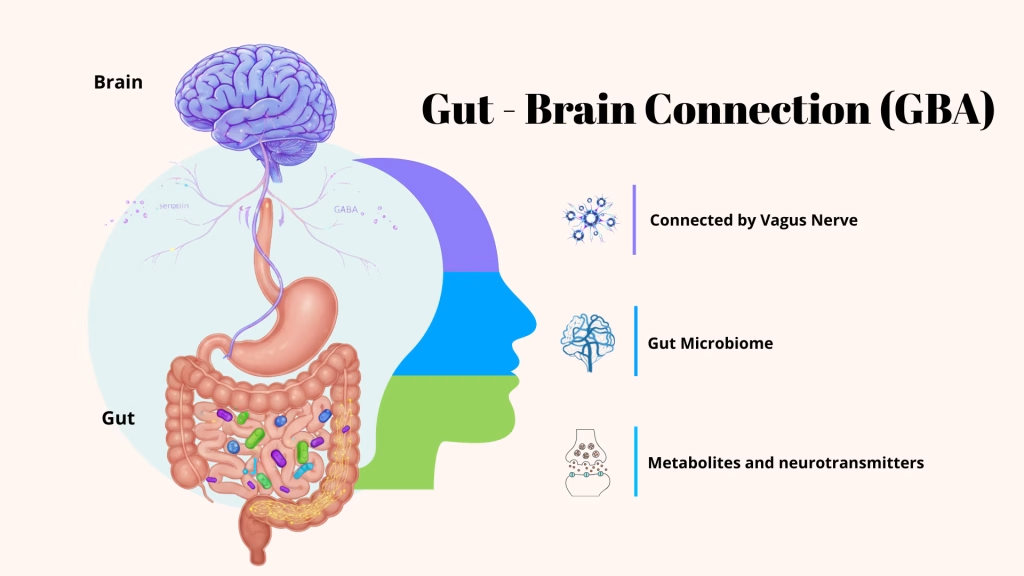
The gut and brain are in constant conversation through three main routes — the vagus nerve, immune system, and neurotransmitters [3,4]. Together, they form a gut-brain axis via a self-regulating feedback loop: when the gut is balanced, it sends signals that promote calm and focus; when it’s disrupted, those messages may become stress-inducing.
The intestinal microbes produce short-chain fatty acids, vitamins, and amino acid precursors that can influence brain activity and hormone balance [3]. Researchers have found that the gut can produce and regulate important neurotransmitters such as serotonin, which influences mood, appetite, and sleep quality [5].
In short, the state of your gut can shape your state of mind.
What Makes a Probiotic a Psychobiotic?
A psychobiotic is defined by its specific, clinically documented influence on the gut-brain axis. Focusing on precise strain codes ensures that the probiotic is backed by evidence:
- Lactobacillus plantarum DR7 — Studied for its role in supporting healthy cortisol balance and stress response modulation in adults [6].
- Bifidobacterium breve CCFM1025 — Reported to calm down the Hypothalamic–Pituitary–Adrenal (HPA) axis, a key stress-response system [7].
The HPA axis is the body’s central stress response system. It links the brain and adrenal glands to control how we react to stress, regulate sleep–wake cycles, and balance hormones like cortisol. When the HPA axis is overactive or out of sync, it can cause increasing levels of cortisol, impacting mood, stress, and anxiety levels [8].
Psychobiotics, Sleep, and Stress Balance
Mood and sleep are closely connected. When in distress, the release of stress hormones can disrupt both the gut microbiome, mood and sleep quality. Psychobiotics that help maintain and restore gut balance may also support a more restful sleep and calmer moods.
Explore how probiotics and psychobiotics can affect sleep, mood and mental health further in these related articles:
The Future of Gut–Brain Research
The field is continuously evolving toward more precise, targeted support.
- Next-Generation Postbiotics
Future research includes postbiotics, which involve using purified microbial metabolites directly (instead of live bacteria) to achieve the desired benefits, such as supporting mental health targeting gut-brain axis [9].
- Microbiome and Cognition
Studies are expanding beyond mood to explore the microbiome’s influence on cognition, memory, and focus. In 2025, the study by McCarthy and Martirosyan reviewed how psychobiotics can enhance memory and focus by modulating the gut–brain axis. [10]
Summary – What is Psychobiotic
Psychobiotics offer both the public and healthcare professionals a sophisticated, evidence-based approach to holistic wellness through the gut–brain connection.
As not all probiotics are considered psychobiotics, when selecting a probiotic supplement, prioritize products with specific strain codes, clear dosage (CFU), and adherence to NPRA guidelines for safety and quality.
Disclaimer: This information is for educational purposes only and should not replace advice from your doctor or healthcare professional. Please consult a qualified provider before making changes to your diet or health regimen.
About the Reviewer
Wennie Sin is a registered dietitian of the Malaysian Dietitians’ Association (MDA), with 12 years of professional experience in the healthcare industry. She focuses on developing innovative, trend-aligned health products and leading successful product launches. A regular speaker at public health talks and Continuing Medical Education (CME) sessions, Wennie is passionate about applying nutrition science into practical guidance that empowers healthier living and disease prevention.
References
- Dinan, T. G., Stanton, C., & Cryan, J. F. (2013). Psychobiotics: A novel class of psychotropic. Biological Psychiatry, 74(10), 720–726. https://doi.org/10.1016/j.biopsych.2013.05.001
- Ansari, F., Neshat, M., Pourjafar, H., Jafari, S. M., Samakkhah, S. A., & Mirzakhani, E. (2023). The role of probiotics and prebiotics in modulating the gut-brain axis. Frontiers in Nutrition, 10, 1173660. https://doi.org/10.3389/fnut.2023.1173660
- Carabotti, M., Scirocco, A., Maselli, M. A., & Severi, C. (2015). The gut–brain axis: Interactions between enteric microbiota, central and enteric nervous systems. Annals of Gastroenterology, 28(2), 203–209.
- Bravo JA, Dinan TG, Cryan JF. The Vagus Nerve at the Interface of the Microbiota-Gut-Brain Axis. Frontiers in Neuroscience. 2018 Feb 8; 12:49. Available from: https://www.frontiersin.org/journals/neuroscience/articles/10.3389/fnins.2018.00049/full
- Bektaş, A., Erdal, H., Ulusoy, M., & Uzbay, I. T. (2020). Does serotonin in the intestines make you happy? The Turkish Journal of Gastroenterology, 31(10), 721–723. doi: 10.5152/tjg.2020.19554
- Chong, H. X., Yusoff, N. A. A., Hor, Y. Y., Lew, L. C., Jaafar, M. H., Choi, S. B., Azlan, A., Liong, M. T. (2019). Lactobacillus plantarum DR7 improved psychological parameters, cortisol and inflammatory levels in stressed adults: A randomized, double-blind, placebo-controlled study. Clinical Nutrition, 38(5), 2053–2064. https://doi.org/10.1016/j.clnu.2018.09.010
- Lan, Y., Lu, J., Qiao, G., Mao, X., Zhao, J., Wang, G., Tian, P., & Chen, W. (2023). Bifidobacterium breve CCFM1025 Improves Sleep Quality via Regulating the Activity of the HPA Axis: A Randomized Clinical Trial. Nutrients, 15(21), 4700. https://doi.org/10.3390/nu15214700
- Cleveland Clinic (2024). Hypothalamic-Pituitary-Adrenal (HPA) Axis. Retrieved on 28 November 2025 from https://my.clevelandclinic.org/health/body/hypothalamic-pituitary-adrenal-hpa-axis
- Homayouni, Aziz & Houshyar, Jalil & Alikhah, Hossein & Kamalledin Mogadam, Saba & Osouli, Zohreh & Sarabi-Aghdam, Vahideh & Asghari, Alireza. (2024). Could postbiotics improve mental health?. BioSocial Health journal. 1. 170-172. https://biosocialhealthjournal.com/FullHtml/bshj-32
- McCarthy J., Martirosyan D. Enhancing Cognitive Health with Psychobiotics. Agriculture and Food Bioactive Compounds 2025; 2(5): 105 – 119. https://doi.org/10.31989/afbc.v2i5.1651