By Associate Prof. Dr Tan Joo Shun
Around the world, the growing threat of antimicrobial resistance (AMR) is reshaping how we think about medicine and health. Antibiotics remain one of humankind’s greatest discoveries, but their overuse and misuse have created a new challenge: bacteria that are no longer responding to treatment.
As a microbiologist, I’ve often reflected on this paradox. We have spent decades trying to eliminate microbes, yet the next phase of health innovation may depend on how well we learn to work with them. That realisation has led scientists worldwide, including Malaysia, to explore a new field: the emerging science of postbiotics.
What are Postbiotics?
In simple terms, postbiotics are the beneficial substances made by good bacteria (commonly from probiotics), along with the dead bacterial cells themselves. Even though the bacteria are no longer alive, what they leave behind can still benefit our health.
If probiotics are the “friendly” living bacteria, and prebiotics are the food that keeps them alive, postbiotics are the finished products of their work, such as cell-wall components, proteins, peptides, short-chain fatty acids (SCFA), organic acids and enzymes, that continue to support our health.
These bioactive compounds send chemical “messages” to our body, helping to soothe inflammation, regulate the immune system, and strengthen our natural barriers. Because they are inactive, postbiotics are safer and more stable than live bacteria (probiotics), which is perfectly suited for tropical climates like Malaysia’s, where heat and humidity make storage and development of probiotics trickier.
Why Postbiotics Matter in the AMR Fight?
Postbiotics represent a powerful shift in how we approach microbial balance. Instead of killing harmful bacteria with antibiotics, postbiotics is an effective alternative that work by restoring microbial balance in the body, in order to inhibit infections and minimise situations that breed resistance.
Certain postbiotic have been shown to suppress the growth of pathogens, prevent biofilm formation, and even help the microbiome recover after antibiotic treatment. In doing so, they complement antimicrobial therapies rather than replace them.
This approach aligns beautifully with the goals of antimicrobial stewardship: using fewer antibiotics when possible, and supporting our natural systems to maintain health in sustainable, evidence-based ways.
Malaysia’s Microbial Diversity Advantage
Malaysia is home to one of the richest microbial landscapes. Our tropical ecosystems, fertile soils, and local fermented foods such as tempeh, tempoyak, tapai, budu, and belacan, are a living buffet filled with microorganisms uniquely adapted to high heat and humidity.
Each fermentation tradition contains microbial strains that may hold therapeutic potential. By isolating, studying and characterising these microbes, researchers are discovering postbiotic compounds that can serve both human and environmental health, from human skin and digestive health to reducing antibiotic use in agriculture to produce better food sources.
Not merely theoretical, this is already being realised through local research initiatives that translate our country’s rich biodiversity into functional, health-protective innovation.
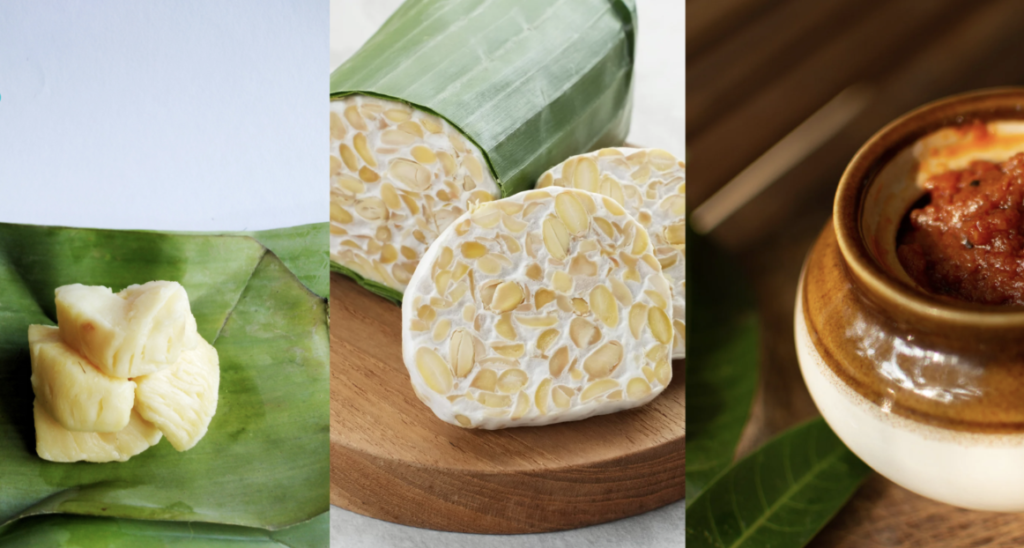
Caption: Some signature Malaysian fermented delicacies, from left to right: Tapai, Tempeh, Belacan.
Building Malaysia’s Capacity in Postbiotic Research
Across Malaysia, researchers are already discovering ways to turn these microbial compounds into nutritional, dermatological, and agricultural innovations that promote health and reduce antibiotic reliance.
One notable example comes from the research partnership project between Pharm-D Health Science Group and Universiti Sains Malaysia (USM). Through this partnership, Malaysian-discovered microbial strains are being developed into patented postbiotics with broad cross-sector applications, such as,
- Postbiotic K014®, derived from Lactiplantibacillus plantarum K014 isolated from fermented cabbage (Sauerkraut), which exhibits potent antimicrobial and anti-inflammatory activity. It has shown efficacy against Staphylococcus aureus, including methicillin-resistant strains (MRSA), and has been applied in skin health, food nutrition, and pet supplements.
- Postbiotic FD1®, another locally discovered strain from fermented Musang King durian, exhibits strong antibacterial and antioxidant properties. It has been shown to effectively inhibit extended-spectrum β-lactamase (ESBL)-producing Escherichia coli and has been incorporated into agriculture feed solutions for poultry, swine, and aquaculture.
These applications also reflect World Health Organisation (WHO)’s One Health philosophy, which recognises the interconnection between human, animal, and environmental health.
It also demonstrates how Malaysia’s scientific community is building its role in antimicrobial stewardship, by transforming local biodiversity and expertise into a foundation for future innovations and solutions to tackle global health crises like antimicrobial resistance AMR.
From Awareness to Action
The story of antimicrobial resistance reminds us how even the smallest organisms can cause some of the greatest threats. Yet, when properly understood and harnessed, these same organisms can also be part of the solution.
The science of Postbiotics offers a new way forward in curbing the antimicrobial resistance (AMR) impact: one that focuses not on fighting nature, but on learning from it and turning it around to mankind’s benefits.
Through ongoing research and collaborations, Malaysia is proving that the next breakthroughs in antimicrobial resistance may not come from synthetic laboratories alone, but from the living intelligence of our microbes and the dedication of the people who study them.
About the Author
Associate Prof. Dr Tan Joo Shun is a leading microbiologist and biotechnology researcher at Universiti Sains Malaysia (USM), specialising in bioprocessing, fermentation technology, microbial metabolites and postbiotic innovation. His work focuses on translating microbial science into applied solutions across human, animal, and agricultural health. At the helm of collaborative research programmes, he drives efforts to uncover and utilise bioactive compounds from local microbial biodiversity, reinforcing Malaysia’s role in sustainable health science and antimicrobial resistance stewardship.